MERCHANT OF RECORD FOR THE UNSERVED
A merchant of record and settlement network for the countries the global payments system declines to serve.
Mission
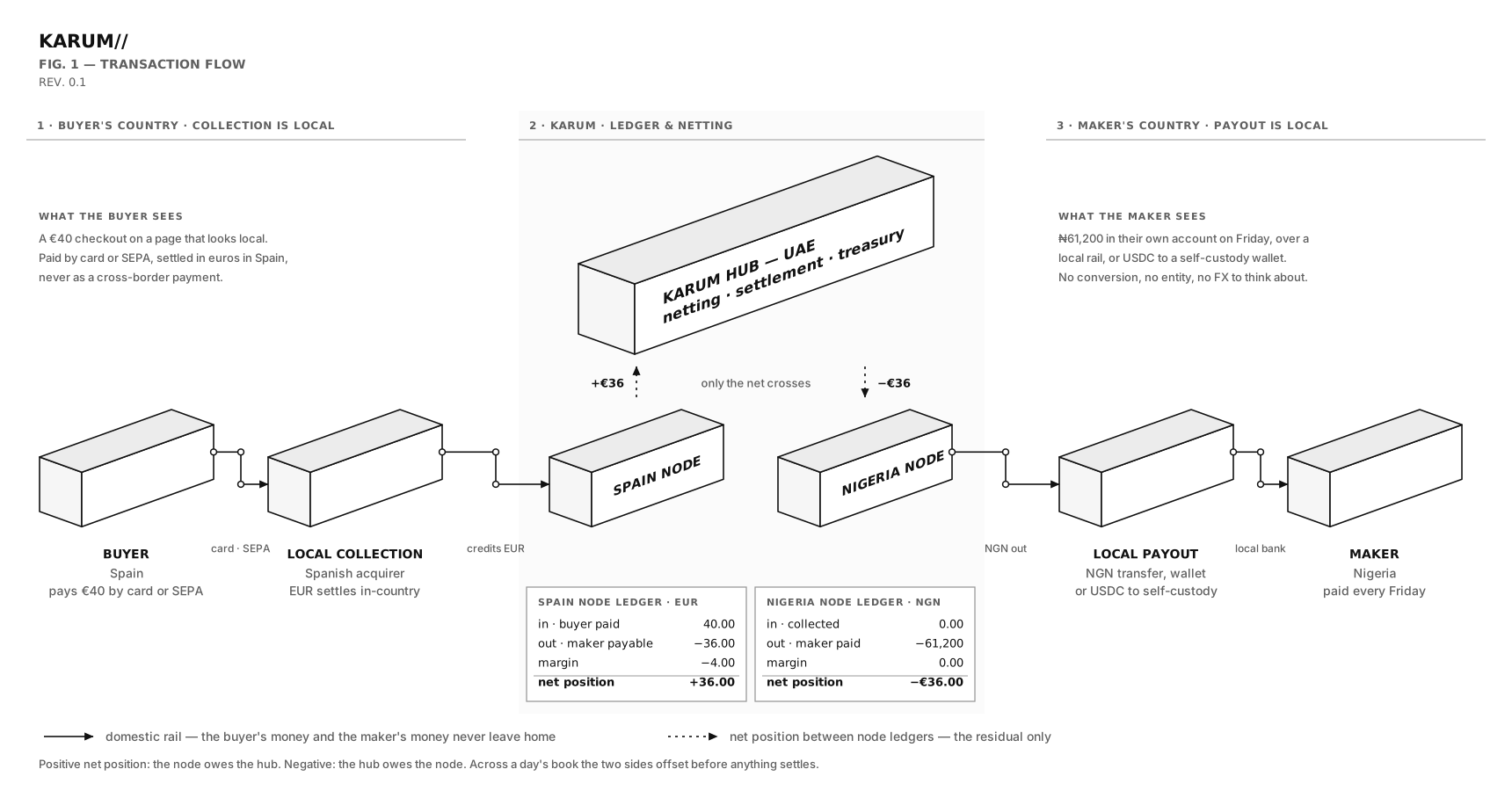
A developer in Lagos or Karachi or Jakarta can build something worth paying for and still have no way to take the money. Not because they are sanctioned and not because they are criminals, but because serving them is unprofitable at the scale of the companies that own the rails. Karum is a merchant of record for those makers. We are the seller, so tax, refunds, fraud and compliance are ours. Money is collected in the buyer's country and paid out in the maker's, and only the net difference between corridors ever crosses a border.
Vision
Where a maker lives should not decide whether they can be paid.
Roughly four billion people sit outside the reach of the global payments system for reasons that are commercial rather than legal. Stripe supports around forty-six countries. Everyone else is a rounding error at that scale, so nobody builds for them.
Karum makes those corridors worth operating. One ledger, local collection and local payout in every market, netted across nodes so the cost of moving money is paid on the residual rather than the flow. A maker signs up to something that behaves like a local provider, sells to a buyer anywhere, and never has to know which currency, which rail, or which entity moved the money.
Architecture
One sale, two countries
- USDC · Base
- Lightning
- SEPA
- Faster Payments
- NIBSS / NIP
- M-Pesa
- Pix
- UPI
- GoPay
- GCash
- OXXO
- iDEAL
- Boleto
- Fawry
Structure
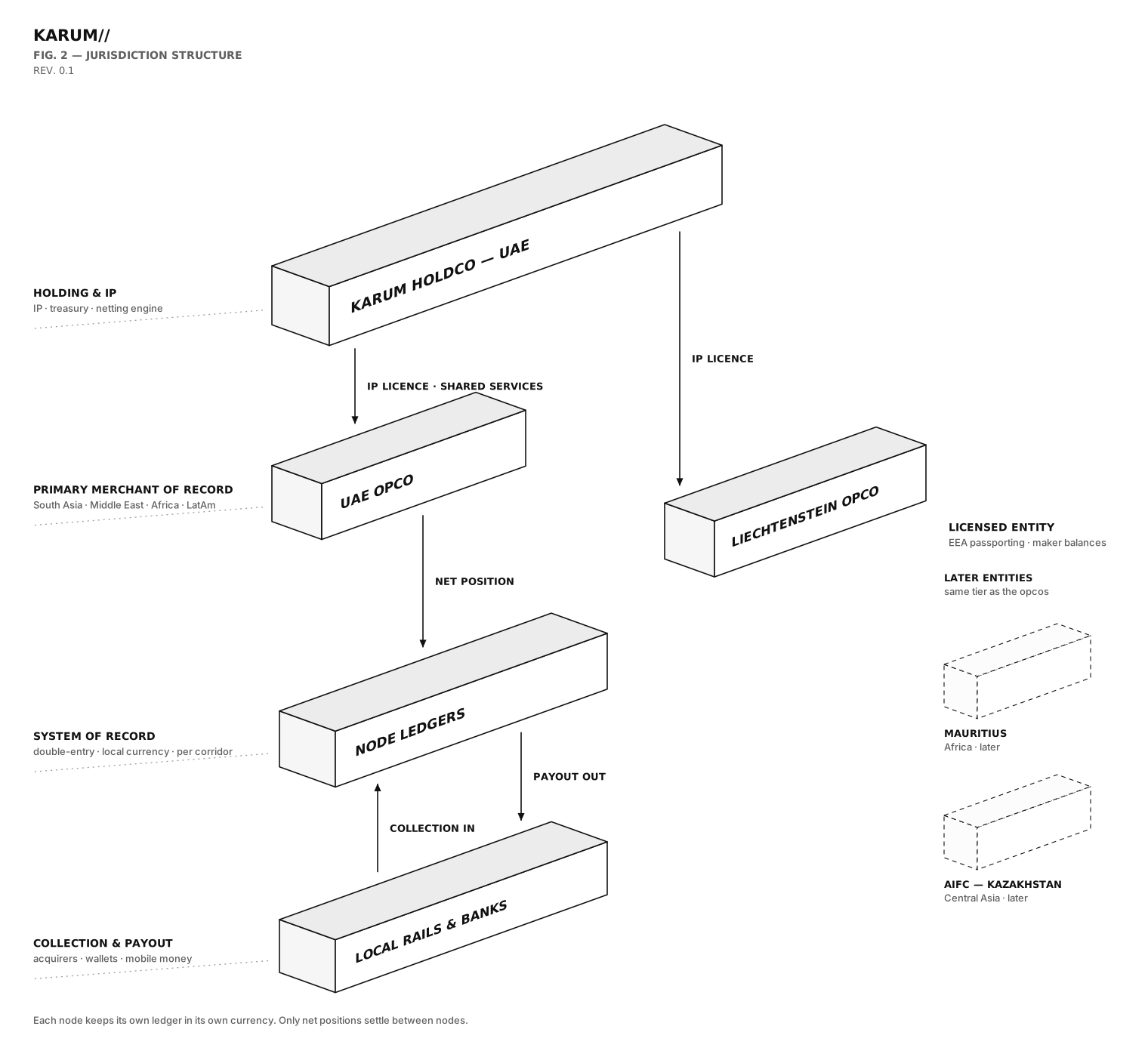
Holding, entities, ledgers, rails
Build
What is ours
- LedgerDouble-entry, multi-currency, per node. The system of record, and not a commodity.
- Netting & settlement engineComputes net positions, picks the rail per corridor, executes settlement. The core IP.
- Reconciliation engineEvery transaction across every rail and entity. If this breaks, we do not know our position and cannot pay makers correctly.
- Checkout & deliveryPayment links, hosted storefront, licence keys, subscriptions, multi-currency pricing.
- Risk & fraud rulesVelocity limits, device fingerprinting, 3DS triggers, chargeback scoring. What keeps the acquiring alive.
- Corridor rulesPer-market rails, methods, limits, documents and tax regime.
Partners — corridors
Local providers, by market
Collection stays in the buyer's country. Payout stays in the maker's. Where a currency cannot legally leave its country, the collection aggregator absorbs that problem and settles to us in hard currency, or we pay the maker in USDC to a self-custody wallet instead.
| Corridor | Collection | Payout | Note |
|---|---|---|---|
| Nigeria | Paystack, Flutterwave, dLocal | Payoneer, local bank, USDC | SEC-licensed VASPs for NGN↔USDC |
| Kenya | Flutterwave, dLocal | M-Pesa, Payoneer | |
| Ghana | Paystack, Hubtel | Payoneer, local | |
| South Africa | Paystack, Peach Payments | Payoneer, local EFT | |
| Egypt | Paymob, dLocal | Payoneer | fiat only |
| Morocco | dLocal (limited) | Payoneer | crypto restricted |
| Pakistan | dLocal (limited) | Payoneer, USDC to wallet | no legal crypto↔fiat |
| Bangladesh | dLocal, local gateways | bKash, Payoneer | crypto restricted |
| India | Razorpay, dLocal | Razorpay, Payoneer | 30% crypto tax |
| Indonesia | Xendit, Midtrans, dLocal | Xendit, Payoneer | crypto not legal as payment |
| Philippines | Xendit, PayMongo | GCash, Xendit | |
| Vietnam | 2C2P, dLocal | Payoneer | no framework |
| Turkey | iyzico, dLocal | Payoneer | crypto payment prohibited |
| Brazil | EBANX, dLocal | Pix, Payoneer | |
| Argentina | dLocal, Mercado Pago | Payoneer, USDC | deepest crypto corridor |
| Mexico | dLocal, EBANX | OXXO, Payoneer | |
| Colombia | dLocal, PayU | Payoneer | |
| UAE | Network International, Telr | local rails | group treasury |
| EU / EEA | Stripe, Adyen, Mollie | SEPA, Wise Platform | Liechtenstein entity |
| UK | Stripe, Checkout.com | Faster Payments | |
| US | Stripe, Adyen | ACH | via BaaS partner, no state MTLs |
Partners — infrastructure
Everything that is a licence, a network or a commodity
None of this is built in-house. Every rail is dual-sourced from day one, because a single provider dropping one corridor is enough to lose a cohort of makers.
| Function | Providers | What it covers |
|---|---|---|
| Identity & KYB | Sumsub, Persona, Veriff, Trulioo, Middesk | maker onboarding, UBO tracing, document verification |
| Sanctions screening | OpenSanctions, ComplyAdvantage, Dow Jones RS | continuous re-screening on every list update |
| Tax | Fonoa, Avalara, Taxually | VAT OSS, US state nexus, digital services taxes |
| Card acquiring | Stripe, Adyen, Checkout.com, Network International | buyer-side acceptance |
| Local aggregation | dLocal, PPRO, PayRetailers, EBANX | forty-plus markets under one contract |
| Global payout | Payoneer, Tipalti, Nium, Thunes, Wise Platform | individual payout into ~190 countries |
| FX & treasury | Airwallex, Ebury, StoneX, Convera | major-pair settlement and hedging |
| Stablecoin | licensed VASPs per corridor, Circle, Fireblocks | net settlement between nodes, stage 3 onward |
| Chain & Travel Rule | Chainalysis, TRM Labs, Notabene | crypto compliance and originator data |
| Banking | Emirates NBD, Mashreq, Wio | the constraint that actually matters |